
Who Else Has a Key to Your Orange County Rental Right Now?
Three tenants ago, someone made a copy of your front door key. Maybe a dog walker has a garage code, or a former contractor still knows the lockbox combination.
None of it shows up on a rent statement, yet every forgotten key is a door you no longer control. Rental security is one of the quietest risks in ownership because problems surface after a break-in, a dispute, or a tenant complaint.
This guide covers what California requires, how to manage keys and smart locks, when you can enter, and how to build a routine that protects people and property.
Key Takeaways
Here is what every Orange County landlord should walk away knowing.
Security hardware is a legal requirement: California Civil Code 1941.3 sets minimum lock standards for doors and windows in most rental units.
Rekeying belongs in every turnover: Resetting locks and codes between tenants closes the gaps that old keys leave behind.
Entry has rules: Civil Code 1954 generally requires written notice, a valid purpose, and normal business hours before you go inside.
Some lock change requests are urgent: Protected tenants with qualifying documentation can require new locks within 24 hours.
Sail Properties and California Security Rules at a Glance
812+ Doors under Sail Properties management |
339+ Owners who trust Sail Properties with their rentals |
254+ Five-star reviews from Sail Properties clients |
24 hours: Presumed reasonable written notice before most landlord entries under Civil Code 1954 |
13/16 inch: Minimum deadbolt extension beyond the door's strike edge under Civil Code 1941.3 |
IN THIS GUIDE
What California Law Requires You to Secure
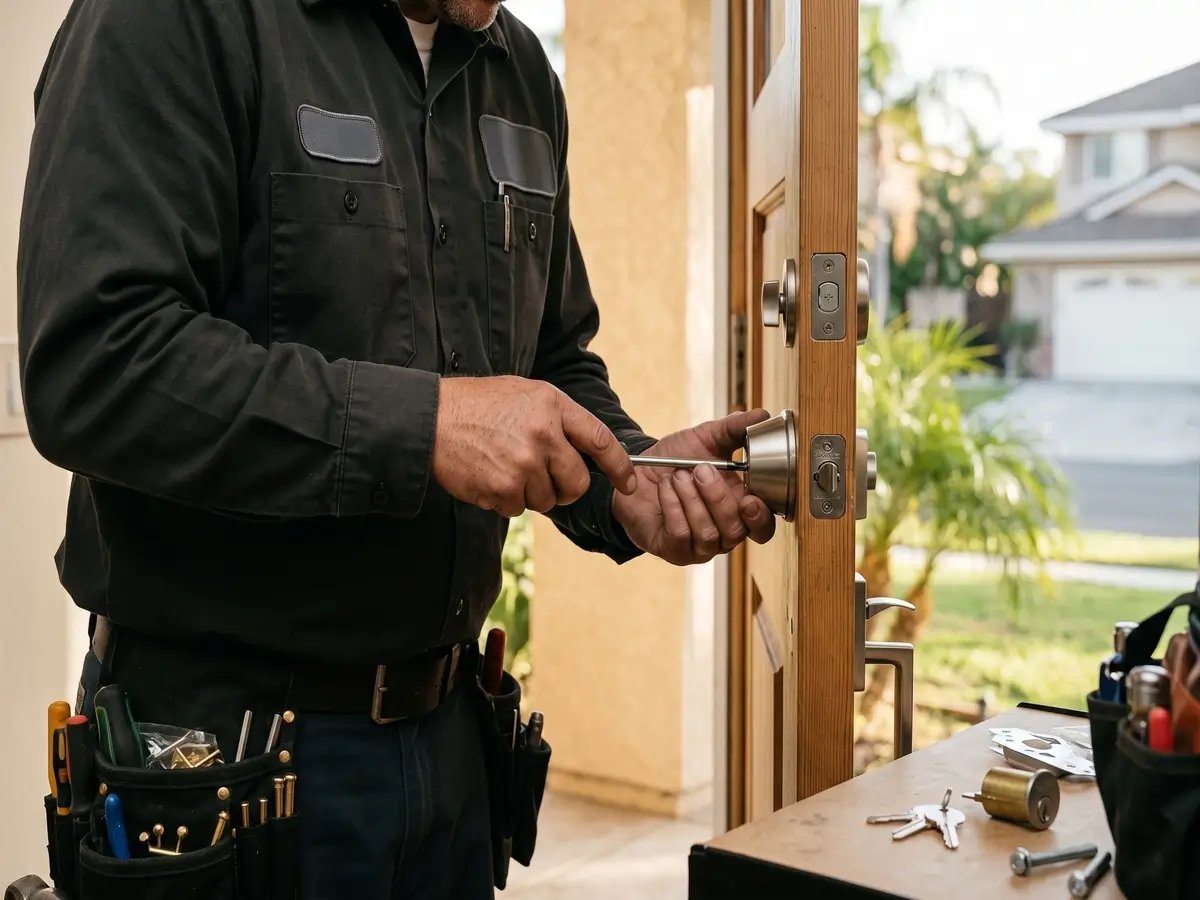
Rekeying Between Tenants Is Non-Negotiable
Smart Locks, Keypads, and Fobs: Convenience With Guardrails
Knowing When You Can Enter Is Part of Access Control
Lock Change Requests From Protected Tenants
Cameras, Lighting, and the Privacy Line
Build a Security Routine You Can Prove
What California Law Requires You to Secure
California sets a clear baseline for rental security that every Orange County owner should know.
Deadbolts on Main Entry Doors
California Civil Code 1941.3 requires an operable deadbolt on each main swinging entry door, with a bolt extending at least 13/16 of an inch beyond the strike edge. Replacement hardware must meet this standard.
Window Locks and Common-Area Doors
Openable windows need working locks, except louvered, casement, and certain elevated windows. Multifamily common-area exterior doors need locks too.
Repair Timelines and Owner Liability
Tenants must report broken hardware, and your liability generally turns on fixing it within a reasonable time after notice. That baseline is only the starting point.
Rekeying Between Tenants Is Non-Negotiable
Every turnover is an access reset, and skipping it leaves your next tenant sharing a door with strangers. Rekeying is not required statewide, but former tenants, guests, and vendors may hold copies you cannot track. At each turnover:
Rekey all entry and garage locks.
Reset openers, keypad codes, and smart lock users.
Collect and log every key, fob, and remote.
Update gate codes and amenity fobs, especially when renting out a condo with HOA rules.
Logging each step creates a clear paper trail.
Smart Locks, Keypads, and Fobs: Convenience With Guardrails
Keyless entry simplifies access control when set up with care.
Where Smart Access Pays Off
Codes can be issued and revoked in minutes, and time-limited vendor codes show who entered and when.
Where Smart Access Can Backfire
A smart lock must still function as an operable deadbolt, so dead batteries can pose a compliance issue. Over-monitoring access logs also raises privacy concerns.
Lease Terms That Keep Keyless Entry Clean
Define who controls the system, how codes change, and what backup access exists.
Clear terms make smart access an asset.
Knowing When You Can Enter Is Part of Access Control
A key does not give you the right to use it at any time.
Valid Reasons and Written Notice
Under California Civil Code 1954, landlords may enter for repairs, agreed services, inspections, and showings with written notice of the date, approximate time, and purpose.
Timing Rules and Emergency Exceptions
Twenty-four hours is presumed reasonable, or six days if mailed. Entry should happen during normal business hours unless the tenant consents or an emergency arises.
Why Entry Habits Can Create Risk
Repeated or poorly justified visits can trigger harassment claims and rank among the warning signs owners should watch for in a property manager.
Clear notices and entry logs protect both sides.
A key gives you access to the property, but only the law gives you permission to use it.
Lock Change Requests from Protected Tenants
Tenants who are victims of abuse or violence have a fast-track right to new locks under SB 1051, effective January 1, 2025:
Change the locks at your own expense within 24 hours of a written request with qualifying documentation.
Documentation may include a restraining order, police report, or qualified advocate's statement.
If the deadline is missed, the tenant may change the locks, with reimbursement due within 21 days for leases executed on or after January 1, 2025.
Never take adverse action based on victim status.
Our maintenance coordination keeps reliable locksmiths ready for exactly this window.
Cameras, Lighting, and the Privacy Line
Visible deterrents help, within California's privacy limits.
Lighting That Deters Without Intruding
Motion-activated lighting is a low-cost upgrade, and battery-backed fixtures support your emergency preparedness plan for Orange County rentals.
Cameras That Respect Tenant Privacy
Cover entrances, parking, and shared spaces, never private areas. Penal Code 632 generally requires all-party consent to record confidential conversations, so stay video-only and disclose cameras in the lease.
Done right, security reassures tenants instead of making them feel watched.
Build a Security Routine You Can Prove
Strong rental security comes from repeatable habits backed by documentation.
Inspections That Double as Security Checks
Our move-in and move-out inspections double as checkpoints for locks, windows, and access devices. They are included in our all-inclusive monthly management fee, and our Maintenance Guarantee means we contact you before any work begins.
Test every deadbolt, window lock, and slider latch.
Keep a key and code log per property.
Check lighting and cameras each season.
Records That Back You Up
Every lock repair and rekey appears in your detailed monthly owner reports, giving you a dated record if security is ever questioned.
That is security you can actually prove.
FAQs About Rental Security and Access Control
Do I have to rekey my Orange County rental between tenants?
California does not require rekeying between every tenancy, but it is a widely recommended best practice. Changing locks and codes at turnover limits the risk of unauthorized access from old keys.
Can I install a smart lock on my rental property?
In many cases, yes, as long as the unit still has an operable deadbolt that meets Civil Code 1941.3 and your lease addresses access. Plan for battery maintenance and backup entry so a malfunction never locks anyone out.
Can I put security cameras on my rental property?
Exterior and common-area cameras are generally acceptable when disclosed, but they should never point into private living spaces. Skip audio recording, which can conflict with California's consent rules.
Control Every Door Before Someone Else Does
The safest rental is the one where you always know who can open the door.
Rental security in Orange County comes down to a few disciplined habits: meeting California's hardware requirements, resetting access at every turnover, respecting entry rules, and responding fast when a tenant reports a problem or requests a lock change. Each step protects your tenants, your property, and your position if a dispute ever reaches a courtroom.
At Sail Properties, we build these safeguards into everyday management for owners in Huntington Beach, Newport Beach, Costa Mesa, Seal Beach, and across Orange County. From documented move-in and move-out inspections to vendor coordination and compliant entry notices, we keep access under control so you never have to wonder who holds a key.
Call us at 714-960-4441 or explore our Huntington Beach property management services to see how we protect your rental from the front door in.
